


Reverse Song & Voice Challenge
4.1432.00 Reviews
App Specs
- Version
- 7.5
- Updated On
- License
- Free
- Downloads
- 10,000,000+
- Developer
- AI Tech Expe
- Categories
- Music & Audio
- Platform
- Android
Screenshots

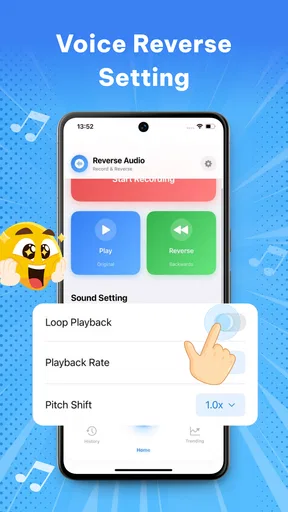
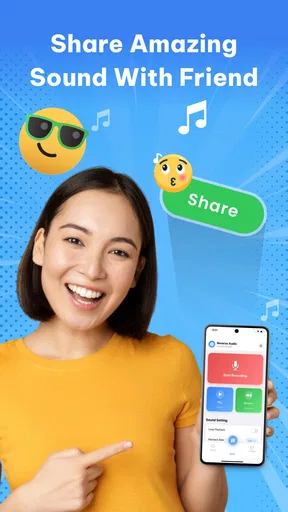
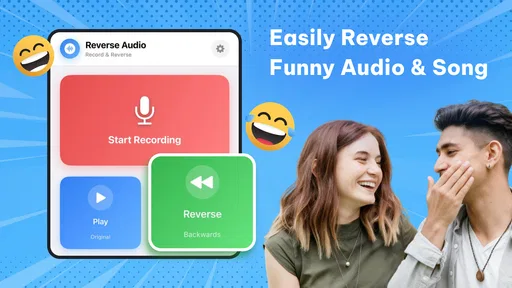
 Analysis by AppCompare
I find reverse audio most interesting when the setup is simple: choose a short phrase or a familiar musical passage, hear it turned around, and let the result surprise you. That is the basic appeal of Reverse Song & Voice Challenge, a free music-and-audio app from DATAX POWER. It has a 4.5 average from around 59,000 ratings and more than a million installs, but I would judge it less as a serious audio workstation than as a playful tool for experimenting with sound.
Connectivity is one part of that experience worth thinking about before you start. Recording your own voice and working with an audio file are different tasks: the first begins with something you make on the spot, while the second depends on having a suitable track available to select. I would prepare a short clip before opening the app if I wanted to try a particular musical idea, rather than assuming every file will be ready to use immediately. That small bit of planning makes the experiment feel more direct.
It is also the kind of app I would use in brief bursts, not leave running as a background music player. A reversed phrase is most fun when you can listen closely, then try to imitate the sound or ask someone else to guess what was said. If I were in a noisy place, I would wait until I could hear the playback clearly; otherwise, the best part—the odd rhythm and syllables—can get lost. With headphones, I can focus on those details, though a phone speaker is enough for a quick laugh with friends.
Unleashing Creativity with Reverse Audio
When I first downloaded the Reverse Song & Voice Challenge, I was intrigued by the idea of reversing audio clips. The app offers a simple yet fascinating concept: record your voice or upload a song and then play it backwards. It sounds straightforward, but there’s a lot more to explore here.
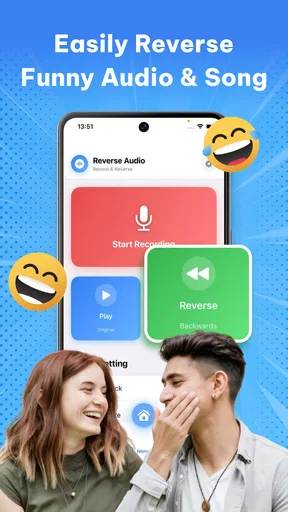
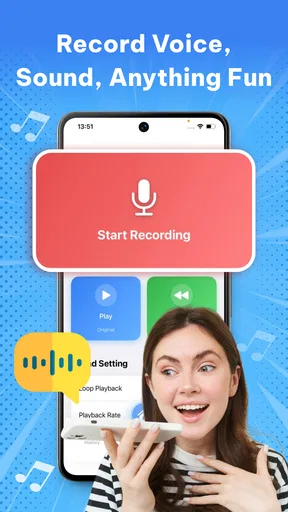
Getting started is a breeze. The interface is pretty intuitive, so even if you're not a tech-savvy person, you’ll find your way around in no time. Just hit the record button, say something, and voila! Your voice is transformed into a reversed version of itself. It’s hilarious to hear your own words coming back at you in this garbled, alien-like fashion.
For a more satisfying first try, I would record a short, clearly spoken line rather than a long story. A compact phrase is easier to recognize after playback and quicker to repeat if the first attempt comes out muddy. It also makes a better challenge for another person: they can listen once, make a guess, and then compare it with the original. Speaking slowly and leaving a little space at the start and end can help keep the clip focused, especially when you are trying to hear how individual sounds change direction.
Diving into the Features
The app doesn’t just stop at voice recordings. You can also upload music tracks to reverse them. This is where it gets really interesting. Ever wondered what your favorite song sounds like backwards? Now you can find out. The app supports a variety of audio formats, so you won’t have to worry about compatibility issues.
Worth Reading Before You Choose

Flipboard Shows What News Apps Must Do Beyond the Feed

Switching to Android Auto Means Rethinking Your Driving Routine

Google Calendar Makes a Crowded Week Easier to Manage

Ludo King Makes the Most of the Minutes Between Plans

Baby Panda World Brings Quick Play to Modern Phones, but Its Game Library Feels Busy

ESPN’s Live Game View Makes Following Close Games Easier
One of my favorite features is the ability to trim and edit the audio before reversing it. This means you can select specific parts of a song or recording to reverse, which can lead to some pretty creative outcomes. Imagine taking the chorus of a pop song and playing it backwards—it’s a whole new experience.
That trimming step is more useful than it may first seem. Instead of reversing an entire track and searching through the result, I can focus on a recognizable moment: a vocal phrase, a repeated beat, or a short transition. It saves listening time and makes comparisons easier. I would keep a note of the section I chose, because a reversed clip can be surprisingly difficult to locate again by ear. The trade-off is that a tiny slice may lose the musical context that made it interesting, so I would include enough lead-in or tail to preserve the phrase’s character.
Entertainment and Beyond
The Reverse Song & Voice Challenge isn’t just about fun and games. It can be a great tool for musicians and sound designers who are looking to experiment with audio. The reversed tracks can serve as inspiration for new compositions or sound effects.
For those interested in exploring the world of hidden messages in music, this app offers an easy way to listen to those backward claims. Whether you believe in them or not, it’s fascinating to explore and spark some interesting conversations with friends.
For a musician, I see the strongest use as a quick idea generator rather than a replacement for a dedicated editor. Reversing a vocal or instrumental passage can suggest an unusual texture or a sound to recreate in a larger project, but the app’s central appeal is the transformation itself. If I needed detailed layering, precise timing across many tracks, or a full production workflow, I would choose a more specialized audio tool. Here, a short reversed fragment is enough to start an idea; I can then decide whether it is worth developing elsewhere.
The hidden-message angle is best approached as a listening game, not proof of an intention in the original recording. Reversal changes the timing and shape of speech, and listeners can hear patterns in unfamiliar sounds. I would treat a surprising result as a conversation starter and check the original phrase before drawing conclusions. That keeps the activity playful and makes it easier to separate what the audio actually contains from what our ears are tempted to imagine.
Ease of Use and Accessibility
One thing I appreciated about the app is how user-friendly it is. The design is clean and straightforward, so you’re not overwhelmed with too many options. It’s accessible for people of all ages, which makes it a fun family activity. Imagine sitting around with your kids and having a laugh at the silly sounds you can create together.
Another point worth mentioning is the app’s performance. It runs smoothly without any noticeable lag, which is crucial when you’re dealing with audio processing. No one wants their creative flow interrupted by a glitchy app!
A realistic use for it is a short break with a friend: record a familiar sentence, reverse it, and see whether the other person can work out what was said. At home, I would use a song snippet everyone knows, but I would avoid turning the whole activity into a long session of guessing. A few carefully chosen clips keep it light and reduce the effort of finding and preparing more audio. The app is rated Everyone, which fits that casual group setting, while younger users should still have an adult nearby if they need help choosing files or navigating a device.
For someone deciding whether it is suitable, the basic question is what kind of listening they want. If they want an immediate novelty, a voice recording is the easiest place to begin. If they have a specific song in mind, they should have that audio available and be ready to select a manageable section. Someone looking for playlists, streaming discovery, equalizer controls, or long-form listening would be better served by a conventional music player or streaming service. Those apps are built around finding and enjoying music; this one is built around hearing familiar sound in an unfamiliar direction.
There is a practical connectivity distinction here, too. The core idea starts with recording or choosing audio, but getting a particular track onto a phone can involve steps outside the app, such as locating a file or making it available on the device. I would not plan a spontaneous group challenge around a song until I had checked that I could select it. For a no-preparation moment, recording a voice is the more dependable route because the material is created right there.
When a Session Gets Interrupted
Audio experiments are easy to abandon if the clip you want is hard to find or a recording is too long to review. My recovery plan would be simple: start again with a shorter phrase, check that the chosen audio is the intended one, and trim to the moment I actually want to hear. That is usually more useful than repeatedly replaying a lengthy file while trying to locate one interesting detail.
If an upload does not behave as expected, I would first try another audio file or a shorter excerpt rather than assuming every problem has the same cause. File selection and the source material can complicate a seemingly simple task, and a clean, familiar sample makes it easier to tell whether the issue is the clip or the process. I would also avoid starting a recording in a busy environment; nearby conversation can make the reversed result harder to interpret, and a fresh take is often clearer than trying to rescue a noisy one.
Connectivity can affect preparation more than the actual joke. If I am out and want to reverse a song, the useful question is whether I can reach the audio I mean to use, not whether the app is a substitute for an online music service. For a quick voice recording, the workflow is more self-contained. I would keep expectations modest if network access is unreliable, prepare the audio beforehand when the song matters, and switch to a voice challenge if file access becomes a distraction.
Using It Thoughtfully on Mobile
Because this is a phone-centered activity, the best clips are the ones that fit the moment. On a commute, I would choose a short voice recording and listen privately rather than trying to manage a song file while moving. At home, where I can pause and replay a section, I have more room to experiment with trimming and compare the original wording with the reversed sound. A phone is convenient for capturing a spontaneous phrase, but its small screen and the distractions around it make focused editing less comfortable than working at a desk.
I also find it helps to decide what I want from a session before opening the app. A quick laugh calls for one sentence; a musical experiment calls for a prepared section and a quieter place to listen. That distinction avoids turning a playful tool into a frustrating search through audio. It is a small workflow tip, but it makes the app feel more useful because the action matches the available time and attention.
The app is free to download, with in-app purchases ranging from $3.99 to $39.99 per item. I would begin with the free experience and decide whether the basic reversing activity is already enough for my needs before considering any purchase. The pricing range makes it sensible to inspect any purchase details carefully rather than assuming every option has the same cost or purpose. The current version is 4.9, and it requires Android 7.1 or later, so device compatibility is another straightforward check to make before setting aside time for a session.
Final Thoughts
Overall, the Reverse Song & Voice Challenge is a delightful app that offers hours of entertainment and creativity. Whether you’re looking to have a laugh with friends, experiment with music, or simply explore the quirky world of reverse audio, this app is a great pick. It’s a fun reminder of how technology can be used to entertain and inspire.
So, if you’re in the mood for something different and a little bit wacky, give this app a shot. You might just discover a new hobby or at the very least, a good laugh. Happy reversing!
My recommendation comes with a clear boundary: I would choose it for playful voice challenges, quick musical curiosities, and rough creative prompts, not for managing a music library or completing polished audio work. Its appeal is the immediate contrast between a phrase you recognize and the strange sound it becomes in reverse. Keep the clip short, prepare a song file when you have a particular one in mind, and use a quiet moment when careful listening matters. With those expectations, it is an easy app to share with friends; if you need a full-featured music or editing setup, a more specialized alternative will suit you better.
Pros
- Fun way to challenge friends with voice recordings.
- Easy-to-use interface for quick access.
- Offers a variety of sound effects for creativity.
- Regular updates with new features and improvements.
- Lightweight app with minimal storage requirements.
Cons
- Limited free features; many require in-app purchases.
- Occasional ads can interrupt the user experience.
- Requires internet connection for some functionalities.
- Lacks advanced audio editing options.
- Not all devices support the latest updates.
FAQs for Reverse Song & Voice Challenge
What is the Reverse Song & Voice Challenge app?
The Reverse Song & Voice Challenge app is a fun and creative application that allows users to record their voice or songs and play them back in reverse. This unique feature offers endless entertainment opportunities, whether you're trying to decipher reversed lyrics or just enjoy the amusing sounds. It's available for both Android and iOS platforms.
How does the app work?
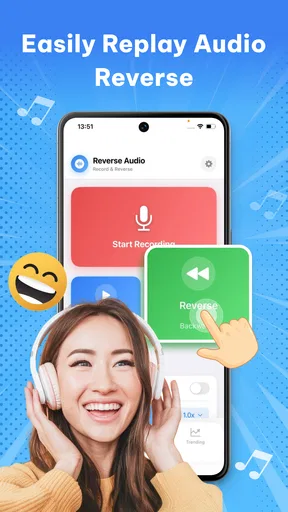
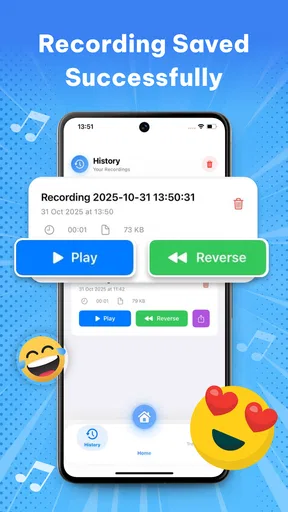
Using the Reverse Song & Voice Challenge app is straightforward. Simply record your voice or a song using the app's built-in recorder. Once recorded, you can instantly play it back in reverse with just one tap. The app provides user-friendly controls to help you manage your recordings efficiently, making it accessible to users of all ages.
Is the app free to use?
The app offers a free version with basic features that allow you to reverse recordings without any cost. However, it may include ads or offer in-app purchases for advanced features or an ad-free experience. Always check the app's store listing for specific details about pricing and available features.
What devices are compatible with the app?
The Reverse Song & Voice Challenge app is compatible with most Android and iOS devices. It requires a stable operating system version—typically Android 5.0 or later and iOS 10.0 or later. For optimal performance, ensure your device meets these requirements and has enough storage for recordings.
Are there any privacy concerns with using the app?
The app requests permission to access your device's microphone and storage to record and save audio files. It is important to review the app's privacy policy to understand how your data is handled. Typically, reputable apps ensure that recordings are stored locally and not shared without user consent.


